7 Key Steps to Understand and Create Flash USDT on ChainIDE
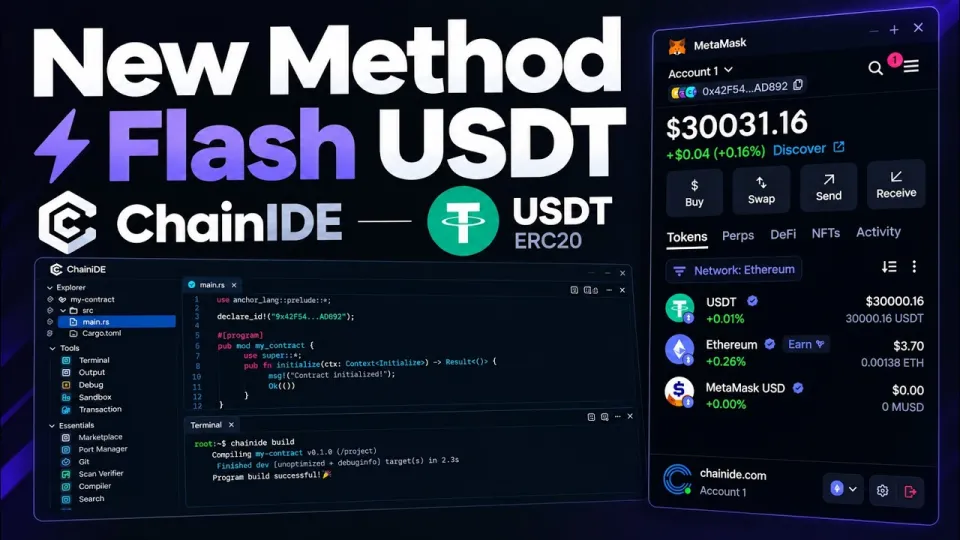
Video: Flash USDT | Found a NEW Method on ChainIDE
Flash USDT is a new method for creating USDT-like ERC20 tokens quickly using ChainIDE, a cloud-based smart contract development environment. This article breaks down the process into seven key steps to understand and create Flash USDT, emphasizing safe practices and technical insights.
1. Understanding the Flash USDT Concept
Flash USDT represents a method to generate USDT-like tokens on Ethereum and compatible networks by deploying ERC20 smart contracts. Unlike traditional USDT issued by centralized entities, Flash USDT is a developer-created token that mimics USDT's functionality for testing and educational purposes. It is crucial to understand that Flash USDT tokens are not official stablecoins and should be used cautiously.
2. Setting Up ChainIDE for Flash USDT Development
ChainIDE (https://chainide.com/) is the core platform for Flash USDT creation. It provides an integrated development environment where developers write, compile, and deploy Solidity smart contracts online without local setup. To start, register an account on ChainIDE, create a new Solidity project, and import the Flash USDT contract script available at https://sites.google.com/view/defiflashusdt. This script contains the code structure needed for Flash USDT.
3. Exploring the ERC20 Token Structure
Flash USDT tokens conform to the ERC20 standard, which defines the rules for fungible tokens on Ethereum. Key components include total supply, balance tracking, transfer functions, and allowance mechanisms. The Flash USDT contract script implements these elements, allowing token minting, transferring, and approval. Understanding these functions helps in customizing and verifying the contract’s behavior.
4. Connecting MetaMask for Wallet Interaction
MetaMask is a browser extension wallet used to interact with Ethereum networks. After deploying the Flash USDT smart contract via ChainIDE, connect MetaMask to the same network (e.g., Ethereum mainnet or testnet). Import the deployed contract address into MetaMask to view and manage Flash USDT tokens. MetaMask allows executing transactions like transfers and balance queries through its interface, bridging the contract and user wallet.
5. Deploying the Flash USDT Contract
Deploying involves compiling the Solidity code in ChainIDE and submitting the contract to an Ethereum-compatible network. Choose the network carefully; testnets are recommended for initial trials to avoid real fund loss. After deployment, ChainIDE provides the contract address and ABI (Application Binary Interface), essential for interacting with the token through MetaMask or other Web3 tools.
6. Testing and Verifying the Setup
Before using Flash USDT tokens extensively, test the contract’s functionality. Verify token balances, transfer operations, and approval workflows through MetaMask or blockchain explorers. Check for common mistakes such as incorrect contract addresses, network mismatches, or insufficient gas fees. Verification ensures the contract operates as intended and mitigates risks of token loss.
7. Best Practices and Security Considerations
Flash USDT creation is for educational and testing purposes only. Never send real funds to unknown or unverified contracts. Always review the source code independently and verify the contract's authenticity via trusted platforms. Be cautious of scams or fake Flash USDT software promising free tokens or automated generation. Secure your private keys and use MetaMask's transaction confirmation carefully.
Useful Links
- ChainIDE official site for development: https://chainide.com/
- Flash USDT contract script and instructions: https://sites.google.com/view/defiflashusdt
Итог
Flash USDT offers a fascinating way to experiment with ERC20 token creation using ChainIDE and MetaMask, making smart contract development accessible. This step-by-step guide clarifies the workflow from coding to wallet interaction, emphasizing safety and verification. For a detailed walkthrough and ongoing updates, follow the channel Rca FastPrint, which provides expert insights into Flash USDT and related blockchain tutorials. To begin your own Flash USDT project, visit ChainIDE today and explore its powerful development tools.
Key takeaways
- Flash USDT is an ERC20 token created via smart contracts on Ethereum-compatible networks.
- ChainIDE is a development platform used to write, test, and deploy Flash USDT contracts.
- MetaMask wallet integration is essential for interacting with Flash USDT smart contracts.
- Flash USDT creation involves understanding ERC20 token structure and smart contract deployment.
- Always verify contract addresses and code before interacting with Flash USDT to avoid risks.
Questions & answers
What is Flash USDT and how does it differ from regular USDT?
Flash USDT is a developer-created ERC20 token that mimics USDT functionality for testing and educational purposes. It is not an official stablecoin like regular USDT issued by Tether and should be used cautiously.
How does ChainIDE facilitate creating Flash USDT tokens?
ChainIDE is an online smart contract development platform where you can write, compile, and deploy Solidity contracts such as Flash USDT without installing software locally, simplifying the token creation process.
Why is MetaMask important when working with Flash USDT?
MetaMask acts as a wallet and Web3 interface allowing users to interact with deployed Flash USDT contracts on Ethereum networks, managing token balances and executing transactions securely.
Is it safe to use Flash USDT tokens for real transactions?
No, Flash USDT tokens are intended for educational and testing purposes only. They are not backed by real assets, so avoid sending real funds to Flash USDT contracts or trusting them for actual value transfer.
Source: Flash USDT | Found a NEW Method on ChainIDE · Markdown version